
Is DEI Dead?
On the rise and fall of DEI and why these initiatives may still survive

Does amplifying more voices allow for greater creativity or is it a hindrance to efficiency? Debates about diversity, equity, and inclusion initiatives (DEI) have intensified across American society as both the private and public sectors have backtracked on previous commitments aimed at improving organizational diversity of thought. After decades of affirmative actions and diversity initiatives, why are so many suddenly rejecting DEI? This edition of the Oasis Collective newsletter explores one of the most vocal critics of DEI in the tech sector, and why the tech industry—once thought of as a place where different backgrounds and ideas could more easily thrive—has become a forthright critic of diversity programs.
What is DEI?
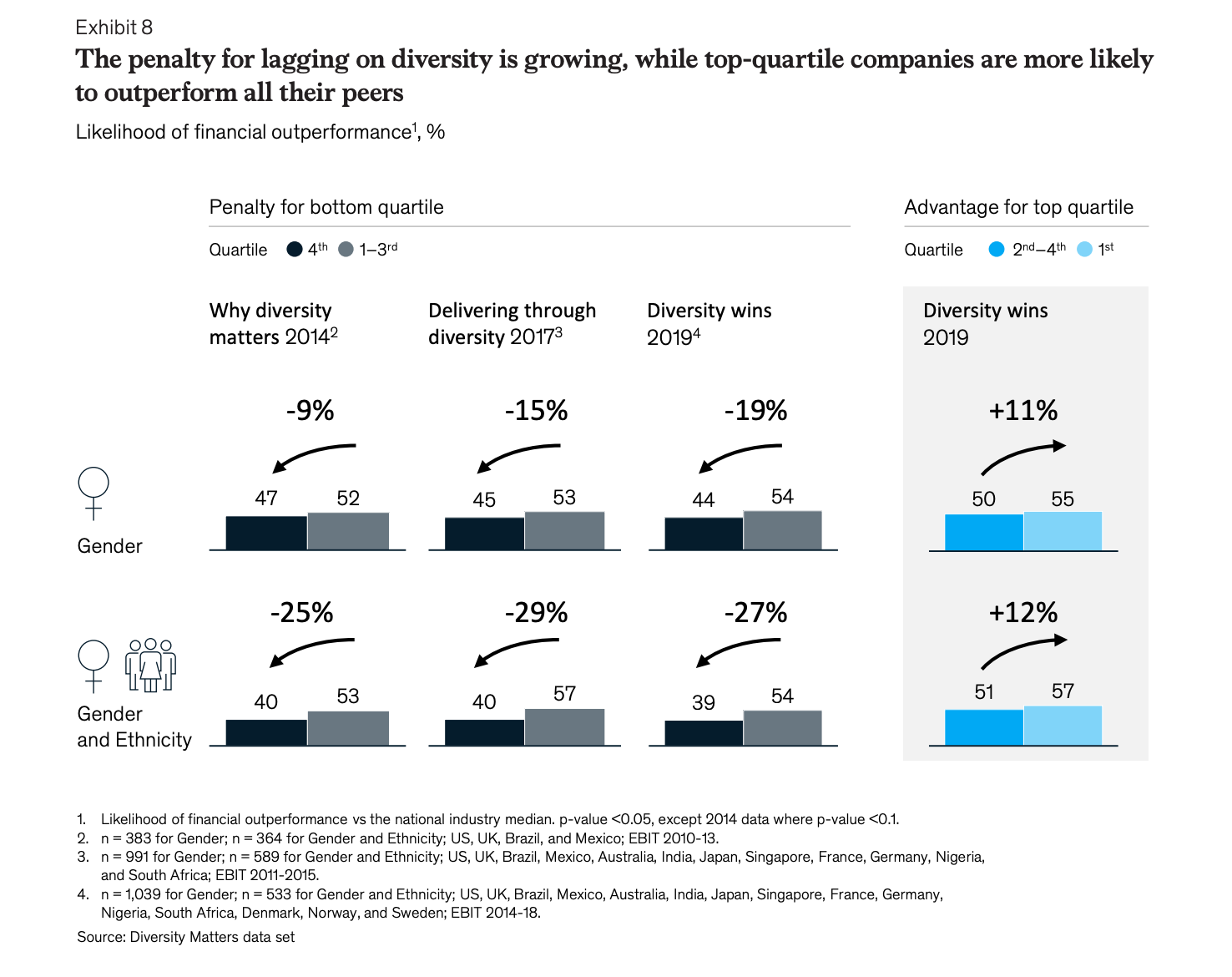
Diversity, equity, and inclusion programs seek to embrace and uplift all people, with a distinct emphasis on historically marginalized groups such as gender and ethnic minorities, LGBTQ+ communities, and those with disabilities. Many Americans who encounter DEI programs do so through workplace initiatives. While the effects of these programs vary drastically, effective programs and inclusive companies are more likely to outperform competitors regarding long-term profitability. Frances West, the former Chief Accessibility Officer at IBM, details in her book Authentic Inclusion Drives Disruptive Innovation how to implement and sustain inclusion in the workplace. She crucially points out that diversity efforts should not be seen as charity cases, outsourced to single departments like HR, or something that should be dealt with during times of crisis. Rather, West emphasizes that in order to successfully implement inclusion efforts that benefit all employees, diversity should be seen as not just good for people but business as well. Diversity efforts should be welcomed companywide (especially by people at the top), and that companies should take “proactive, embedded principles” to approaching DEI. A 2020 study conducted by McKinsey and Co. found that companies leading in gender and ethnic diversity are 12 percent more likely to financially surpass their peers. Besides financial benefits, a 2016 Harvard Business Review article found that diverse perspectives helped organizations avoid groupthink, and accelerated creative solution processes. Despite slow but promising returns, DEI’s future remains uncertain as the current political climate and, in turn, corporations have criticized DEI for undermining meritocratic processes by favoring certain groups.
Why The About-Face on DEI?
The shutting down of DEI programs across the country comes at a time when we are experiencing a wave of right-wing political dominance in America. As opposed to more progressive policies which promote DEI initiatives as ways to uplift and provide opportunities to historically marginalized groups, DEI’s detractors argue that these actions have led to discrimination against those who fall outside of these marginalized groups, and has led to the undoing of meritocracy. In his first day in office, Trump enacted an Executive Order “ending radical and wasteful government DEI programs and preferencing.” At the same time, Trump’s second presidency has been noticeably defined by his closeness with many leaders in the finance and tech industries.
Hoping to curry favor with the White House, these leaders have rolled back the DEI programs that they had heavily invested in just a few years prior. While DEI programs have long been controversial, the now extreme rejection of them has brought up several important questions regarding the state of DEI and its future. Were industry leaders ever sincere about promoting diversity? How beneficial were DEI programs, and were there overlooked shortcomings that prompted such intense backlash? Do these recent government and corporate actions spell the end of DEI, and what does the future of DEI look like now?
Meta and DEI
Perhaps the most talked about case of DEI initiative rollbacks is Meta. In early January, Meta announced the end of its Diverse Slate Approach (DSA), which focused on recruiting from underrepresented groups. They have since replaced their old DEI program with a department called “Accessibility and Engagement.” In an internal memo obtained by CNBC, Meta laid out their reasoning for ending DEI, suggesting that these programs have given way to “preferential treatment of some groups over others.” Additionally, the memo notes that representation goals for women and ethnic minorities “can create the impression that decisions are being made based on race or gender” and that the company wants to “eliminate any impression of it.”
The language used in Meta’s internal memo is markedly different from their 2017 company news article titled “Facebook Diversity Update: Building a More Diverse, Inclusive Workforce.” Maxine Williams, who was previously Meta’s Global Director of Diversity (but has now been moved to a new role in the Accessibility and Engagement department), staunchly advocated for a more diverse, inclusive Facebook by promoting three programs that were established to reach this goal. The Diverse Slate Approach, managing unconscious bias classes and programs, and Facebook University were the company’s DEI crown jewels. Williams noted that these programs helped “build better products, make better decisions and better serve our community.”
The existence of an Accessibility and Engagement department that still emphasizes that diverse backgrounds help “break down language barriers, make better business decisions and connect communities around the world” hints that DEI has not been completely buried at Meta. However, company (and many others) have taken down explicit mentions of women, race, and sexuality.
Beyond parting ways with DSA, Meta’s DEI takedown has spawned in more aggressive forms. In conjunction with rolling back on DEI, Mark Zuckerberg has loosened online speech restrictions. While Zuckerberg has argued that Meta is protecting and promoting free speech, critics have suggested that these actions encourage hate speech to proliferate. Nonbinary and transgender themes have been deleted on Messenger, and Meta’s new Hateful Conduct policies explicitly state that they “allow allegations of mental illness or abnormality when based on gender or sexual orientation, given political and religious discourse about transgenderism and homosexuality and common non-serious usage of words like ‘weird.’” Additionally, Meta has scrapped its fact-checking system in favor of Community Notes, which places the responsibility to provide context onto users rather than certified third-party fact-checkers.
In spite of severe backlash, Zuckerberg has stood by these sweeping changes as “prioritizing speech” and pushing back on those “going after American companies and pushing to censor more.” At the same time, Meta has been accused of blocking posts from abortion pill providers, and their removal of LBGTQ+ themes on Messenger have led many users and digital rights groups to point out Meta’s hypocrisy and biases on who is offered free speech privileges.
Beyond Meta users and digital rights groups, Meta’s drastic changes have sparked heated conversations throughout the tech and advertising ecosystems. Advertisers are worried about “brand safety” (which ensures that their content is kept away from controversial content). Given the political entanglements that Meta has been involved in over the past few years, many conservatives have accused advertisers of left-wing political bias. A PepsiCo former marketer Brad Jakeman noted that brand safety “has become politicized and it was never motivated by politics.” Practices that were once seen as benign have not come out unscathed by the increasing politicization of social media.
What Does This All Mean for the Future of DEI?
For a large part of the mid-2010s, the general consensus amongst many tech companies was that DEI was (for the most part) a way forward to creating a more harmonious and well-rounded work environment that would hopefully translate to broader society. However, with a myriad of companies following Meta’s footsteps in killing DEI programs, this brings up several crucial questions. What is the future of DEI (if it even has one)? Given the timing, do Zuckerberg and others genuinely believe that DEI is harmful or have their actions simply been for political and pragmatic reasons? Zuckerberg has been outspoken about his support for what he calls “free speech traditions,” and went as far as to claim that the corporate world has become “culturally neutered.” These statements were heavily publicized during his appearance on the Joe Rogan Experience podcast where they discussed DEI initiatives, content moderation, and the future of AI. These views echoed the types of discussions being held in the MAGA camp, and Zuckerberg’s appearance on Rogan’s podcast (where Rogan has publicly expressed his support for Trump) as just another instance of business leaders cozying up to the President in order to ensure that the White House protects and furthers corporate America’s interests. While there’s a strong sense of pragmatism at work here, some have used recent events as an opportunity to pull back the curtain on Meta’s true colors. Bärí A. Williams, an attorney and startup advisor who built Facebook’s Supplier Diversity Program while she was a senior counsel there, wrote in an MSNBC article that she was “surprised that it took him so long” to dismantle the DEI program that she created. She argued that since DEI is no longer politically advantageous for him, Zuckerberg was quick to get rid of what no longer serves him. Notably, Williams stated that “the business case for diversity was only valid as long as [Sheryl] Sandberg was around to enforce it.” Sandberg, whose book Lean In (despite its controversial messages) was for a long time considered to be the blueprint for workplace feminism, resigned from Meta in 2022.
In an article in The Guardian, former Meta employees noted that while Facebook had DEI initiatives, Zuckerberg’s support for them was never clear. What they were sure of was that during the mid-2010s when Maxine Williams and Sandberg were in charge of DEI programs, the diversity message thrived. Mike Rognlien, a former Facebook employee, pointed out that many of his colleagues resonated with or supported workshops about unconscious bias. For Williams and Sandberg, their view that building a company that was representative of the world’s diversity seemed to be welcomed by many employees.
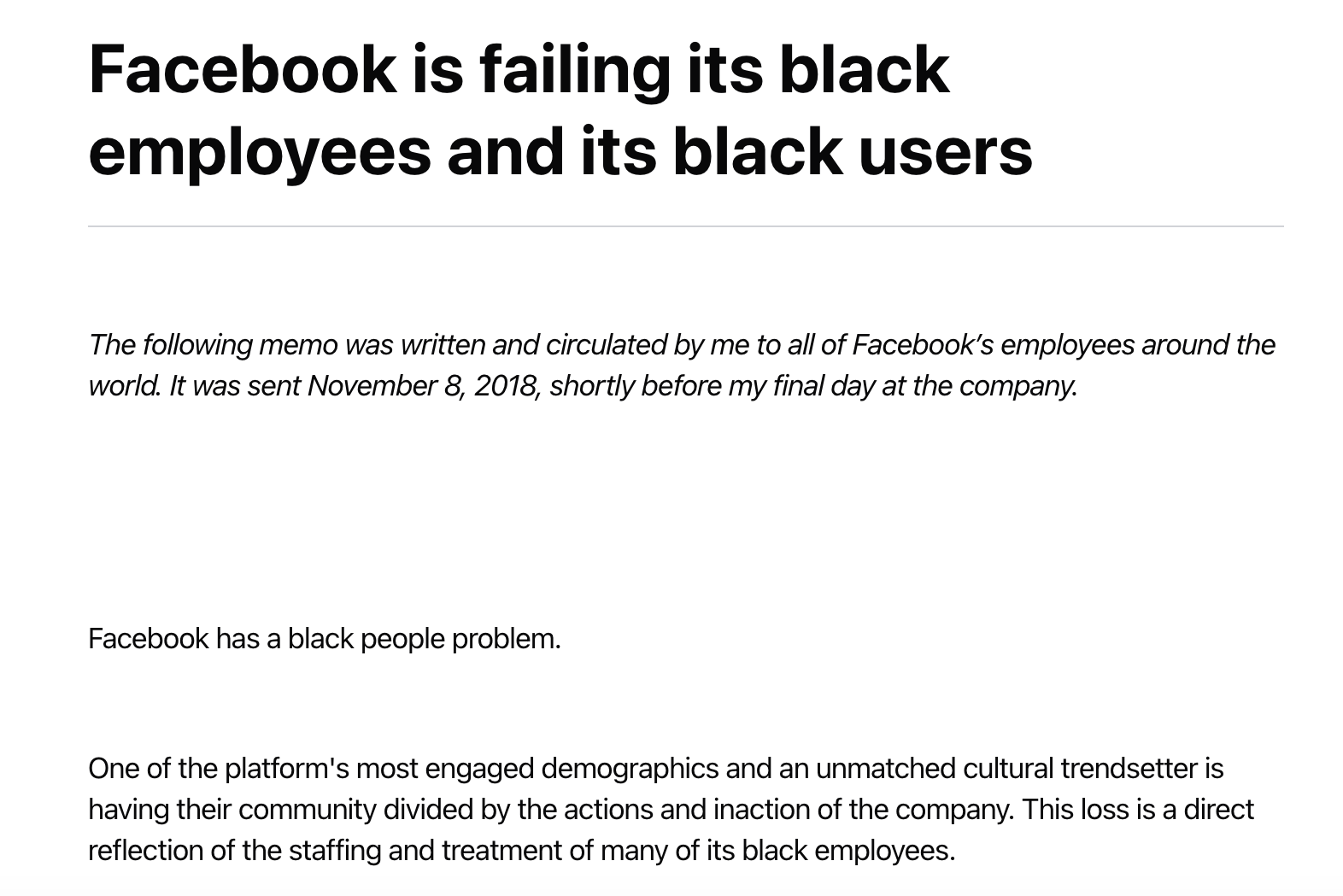
However, Meta’s diversity messaging did not last for long. In 2018, Mark Luckie, a former Strategic Partner Manager for Global Influencers at Facebook, published a memo (and later post) on the platform titled “Facebook is failing its black employees and its black users.” Luckie described the company’s racial discrimination that he witnessed or experienced, such as managers discouraging Black employees from “becoming active in the [internal] Black@ group or doing ‘Black stuff.’”
DEI programs at Meta began to fall apart even after the Black Lives Matter movement in 2020 prompted the corporate world to take diversity initiatives more seriously. Former employees featured in The Guardian article noted that exceptions were made for diversity goals and DEI that programs were trimmed. By the time Facebook became Meta in 2022, this marked not just a name change, but a cultural one too as Zuckerberg set his sights on “efficiency.”
Were these all signs that Meta’s (and broader corporate) DEI initiatives wrongly executed this entire time? A 2022 Harvard Business Review article analyzed that lacking standards, consistency, and accountability have hindered DEI efforts. In another HBR article titled “Why Diversity Programs Fail,” the authors note that Wall Street firms have used the same DEI programs as they did in the 1960s. Additionally, the article’s findings assert that mandatory trainings can backfire and cause employees to harbor negative attitudes and sow division. While this report was published in 2016, similar negative views still stand. Even those working in the DEI sector have been open about their own shortcomings. Our Human Family Weekly, a magazine that focuses on “racial equity, allyship, and inclusion,” discussed this in an article titled “Why Organizations Fail at DEI.” Written by diversity activist and author Lecia Michelle, Michelle emphasizes that typical box-checking and “one-and-done” trainings are simply virtual signaling and provide no substance to what could potentially be valuable opportunities to create healthier work environments. What is key to ensuring successful DEI programs is making DEI a part of companies’ long term goals and keeping initiatives as transparent as possible.
Circling back to the 2016 Harvard Business Review article, while the authors noted that many corporations were failing at reducing bias and increasing diversity, they did point out multiple effective solutions. Instead of using DEI programs as a way to “shame” certain groups, the most effective tactics were those that promoted engagement to solve problems (such as mentorship programs for underrepresented groups), encouraged employees from different backgrounds to work together, and pushed for social accountability through diversity task forces. What these articles and analyses all have in common is that in order for DEI to really work, it should be framed in a positive light that emphasizes the fact that diversity is beneficial socially and economically instead of unintentionally sowing divisions through highlighting differences between groups.
Parting Thoughts
As an organization that was founded on the mission to uplift women of all backgrounds in AI and the broader tech industry, Oasis Collective remains committed to DEI’s core messages. Despite the wave of companies turning away from these efforts, we shouldn’t give up on these initiatives. Although many programs have fallen short or simply failed to be effective, there are proven cases of DEI being effective and bringing positive change to all if it is well implemented. Research conducted by the University of Pennsylvania Program of Organizational Dynamics in 2021 found several solutions to optimizing innovation potential in large software organizations. These included establishing small but more diverse teams in early ideation stages, workplace psychological safety (cultivating inclusive and transparent environments), and encouraging diversity and individuality. The research found that:
Over-cohesion and entrenching can create an environment that is actually too harmonious and discourages outliers…clearly and intentionally inviting all members of the organization to learn, practice, and participate in innovation activities is a meaningful commitment to inclusion that facilitates innovation.
Being around others of different backgrounds leads to diversity of thought—a trait that many companies value because it fosters innovation. Silicon Valley’s utmost priority is innovation, and if they want to be ahead of the game they need to include and provide opportunities for underrepresented demographics. Additionally, DEI is not bad for business. In a 2023 study conducted by the London School of Economics, the authors found that amongst analyzing 945 companies across the UK and US, while DEI had no effect on short-term market performance, diversity programs were “positively associated with long-term market valuation and innovation.” In diverse teams, different perspectives and problem-solving solutions are brought to the table, thus increasing the chances of better preparation, being able to anticipate alternative viewpoints, and making more well-informed choices.
There needs to be a mindset shift in Silicon Valley and the corporate world in general. Currently, political rhetoric is dominated by a fixed pie fallacy and a zero-sum view of power that imagines the workplace as having a finite number of opportunities for employees to succeed. This can partly explain why so many DEI critics see these programs as unfairly taking away opportunities that they believe to be theirs. This creates a vicious, uber-competitive system that sows resentment and distrust between groups. In a presently polarized society, this provides a prime chance for reformed DEI programs focused on engaging and uplifting employees (regardless of background) to build bridges. Not only can these initiatives open doors and break glass ceilings for historically marginalized groups, but creating stronger ties between different groups is simply good for business. By encouraging engagement and trust, we are in turn strengthening the social fabric that we depend on to promote harmonious relations and advancement for every echelon of society.